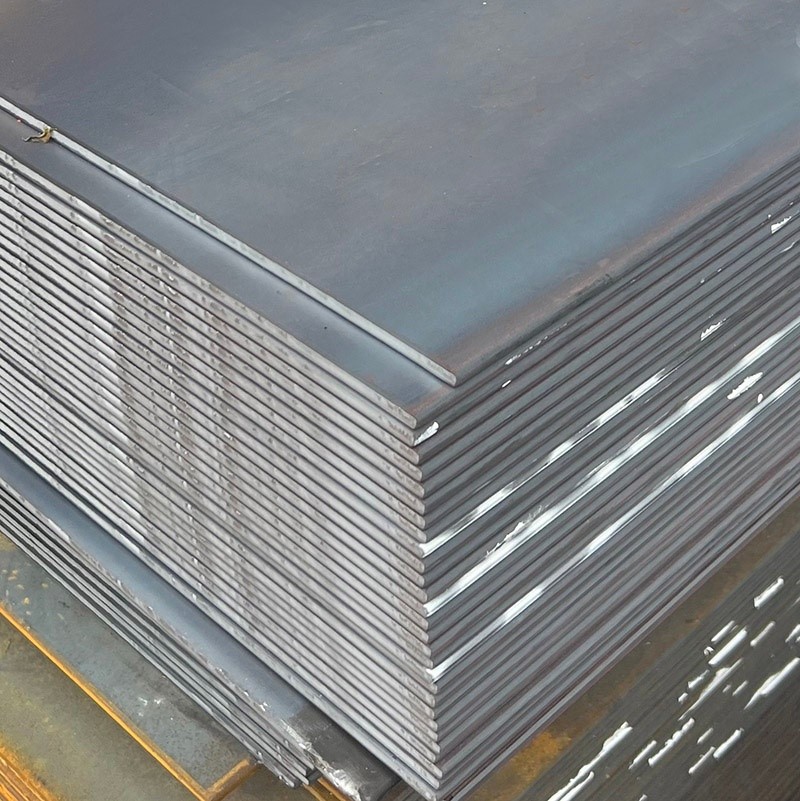
Bridge plates (English: steel plates for bridges) are thick steel plates specifically manufactured for the fabrication of bridge structural components. Produced from carbon steel and low-alloy steel, these plates are designated by a steel grade suffix of "q" (signifying "bridge") and are primarily utilized in the construction of highway bridges, railway bridges, and cross-sea bridges.
In my country, the strength grades for structural steel used in bridges span the range from Q345q to Q690q. This category encompasses various types-including weathering bridge steel and stainless steel clad plates-and is available in thicknesses ranging from 4.5 mm to 50 mm. The current standard governing structural steel for bridges is GB/T 714-2015; its updated version, GB/T 714-2025, is scheduled to take effect on May 1, 2026.
This product is required to meet rigorous standards regarding high strength, toughness, weldability, and corrosion resistance. Typical applications include major engineering projects such as the Hutong Yangtze River Bridge and the Pingtan Strait Bridge. Production processes incorporate low-carbon micro-alloying designs, Thermomechanical Control Process (TMCP)-either independently or combined with tempering-and normalizing rolling techniques; through the optimization of rolling parameters, the low-temperature impact toughness of the material is significantly enhanced. Furthermore, for structural components such as U-ribs, laser-tracking welding technology is employed to ensure precise control over weld penetration depth, thereby guaranteeing the structural integrity and load-bearing performance of the bridge deck units.