


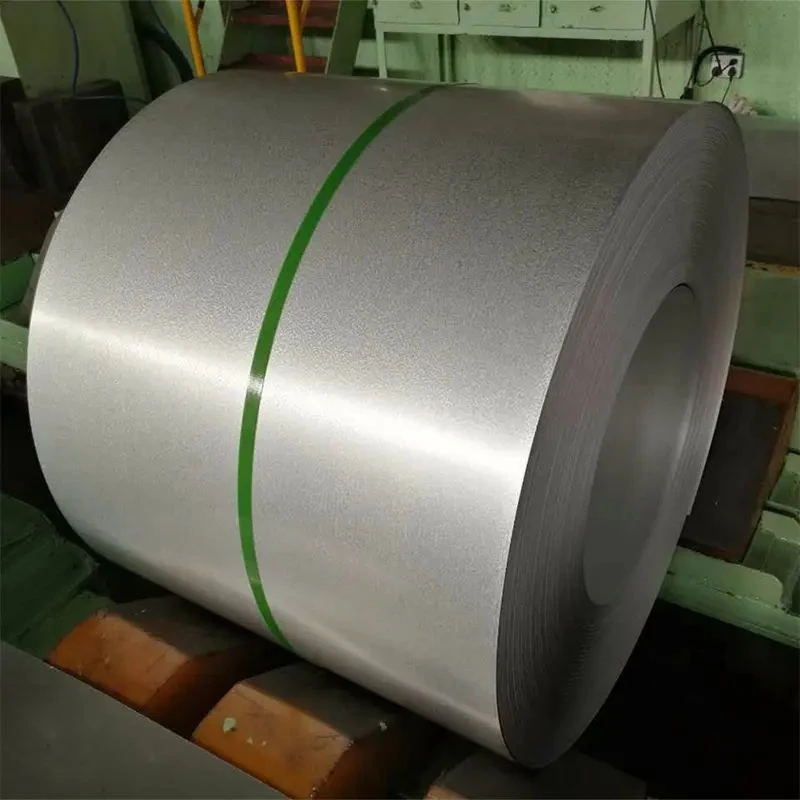
Product Overview
Aluminium coil is the rolled feedstock behind a very wide range of products: roofing and cladding, signage, insulation jacketing, truck bodies, air ducts, cookware and general sheet metal work. The grade decides what the coil can be formed into - 1050 and 1100 are commercially pure and form and conduct well, 3003 adds manganese for strength and corrosion resistance, and 5052 adds magnesium for marine and structural duty.
Temper matters as much as grade. An O temper coil bends without cracking but has little strength; H14 and H24 give a work-hardened sheet that holds shape in roofing and cladding. Choose wrongly and the coil either cracks at the fold or dents under foot traffic.
We supply 1050, 1100, 3003 and 5052 coil in 0.2 to 4.0 mm, slit to width, mill finish or with a stucco-embossed surface, as coil or cut to length, with mill certificates.
Key Advantages
- Grade matched to the job. 1100 for forming and conductivity, 3003 for strength with corrosion resistance, 5052 for marine and structural work.
- Temper control. O, H14, H24 and H32 supplied to the hardness the forming operation needs.
- Width to your line. Slit from 1000 to 1500 mm parent coil, so the customer's roll former is not trimming scrap.
- Surface options. Mill finish, stucco embossed, or coated on request.
- Coil or sheet. Full coil for continuous lines, cut sheet for jobbing shops.
Technical Specifications
| Parameter | 1050 / 1100 | 3003 | 5052 |
|---|---|---|---|
| Alloy type | Commercially pure | Al-Mn | Al-Mg |
| Typical temper | O / H14 / H24 | O / H14 / H24 | O / H32 |
| Thickness | 0.2–4.0 mm | 0.2–4.0 mm | 0.5–4.0 mm |
| Width | 1000–1500 mm | 1000–1500 mm | 1000–1500 mm |
| Coil weight | 2–5 t | 2–5 t | 2–5 t |
| Surface | Mill / stucco | Mill / stucco | Mill |
| Tensile (H24) | 115–150 MPa | 145–180 MPa | 215–265 MPa |
Step-by-Step Manufacturing Process
- Melting and casting. Alloy chemistry set, cast into slab with grain structure controlled for rolling.
- Hot rolling. Slab rolled to intermediate gauge, then coiled.
- Cold rolling. Rolled to final thickness with thickness and flatness control.
- Annealing or work hardening. Temper achieved by annealing or by controlled cold reduction.
- Slitting and inspection. Slit to width, edge trimmed, surface inspected, coil weighed and packed.
Quality Assurance & Certificates
- Mill certificate per coil: alloy, temper, chemistry, mechanical properties
- Thickness and width report with tolerance check
- Surface inspection record - scratches, inclusions, roll marks
- Dimensional and flatness check for cut sheet orders
- Third-party inspection available on request
Core Applications
- Roofing and wall cladding - 3003 and 1100 in H24
- Signage and fascias - flat, formable sheet in 1100
- Insulation jacketing for tanks and ductwork
- Truck and trailer bodies - 5052 for strength
- General sheet metal and cookware - 1050 and 1100 in O temper
FAQ
Which alloy for roofing?
3003 in H24 is the usual choice: enough strength to walk on, good corrosion resistance, and it folds without cracking. 1100 is softer and cheaper but dents more easily.
Can you supply cut-to-length sheet?
Yes, cut to length from coil with protective film on request. Coil remains the better option for continuous roll-forming lines.
Is 5052 available in thin gauges?
From 0.5 mm upward in practice. Below that, 3003 or 1100 is the sensible choice for cost and formability.


Frequently asked questions
What does the Aluminium Coil specification cover?
Alloy type: Commercially pure; Typical temper: O / H14 / H24; Thickness: 0.2–4.0 mm.
Where is Aluminium Coil used?
Roofing and wall cladding - 3003 and 1100 in H24; Signage and fascias - flat, formable sheet in 1100; Insulation jacketing for tanks and ductwork.
What documentation is supplied with Aluminium Coil?
Mill certificate per coil: alloy, temper, chemistry, mechanical properties; Thickness and width report with tolerance check.


