


Product Overview
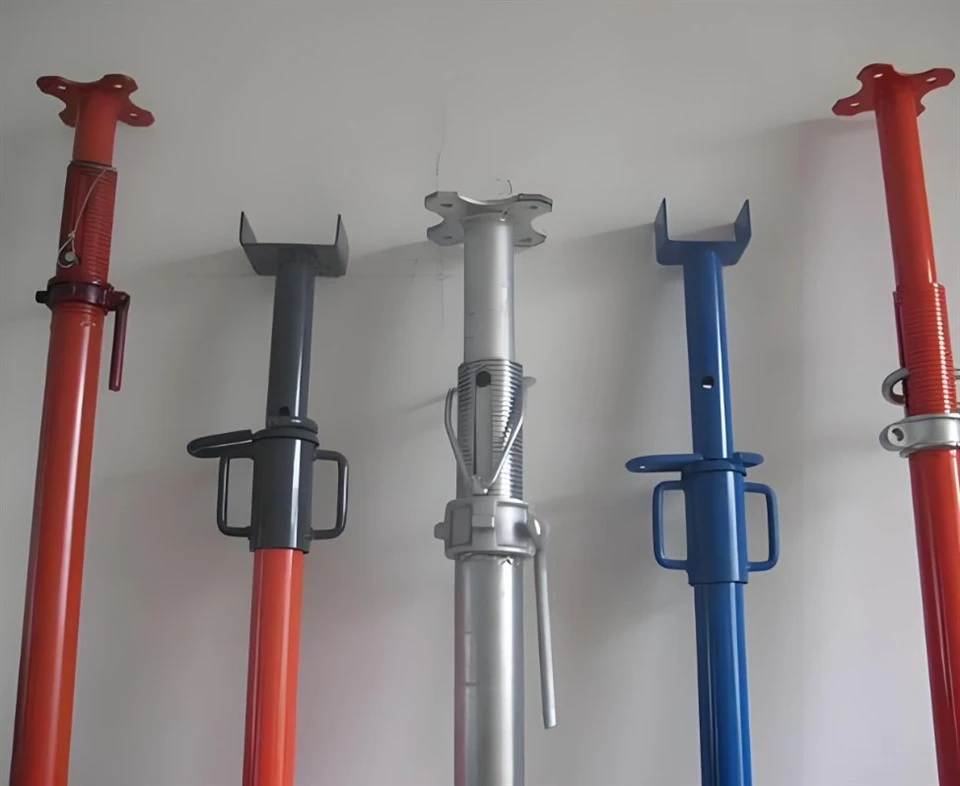
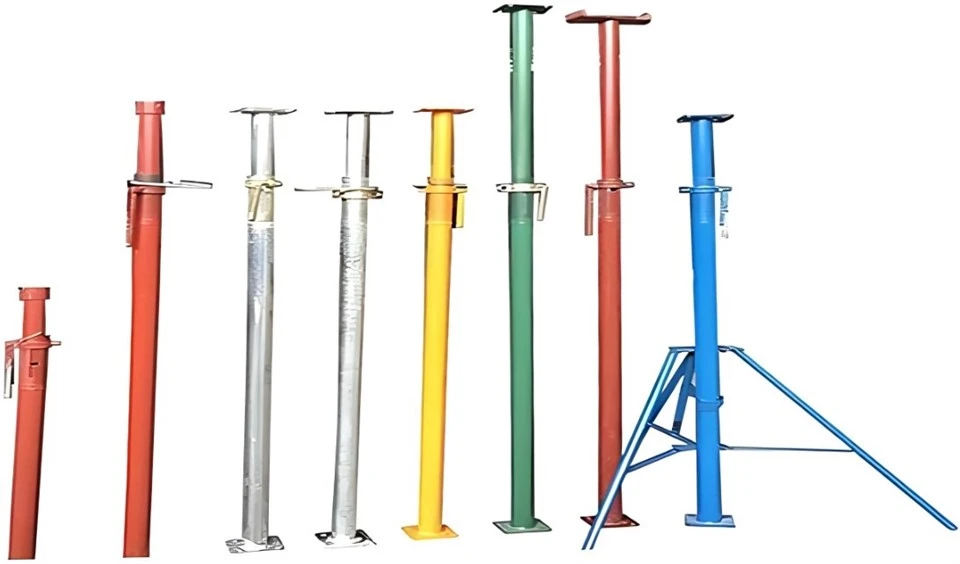
An adjustable steel prop is a telescopic post used to support formwork while concrete sets: an outer tube, an inner tube, a pin to set the coarse height, and a threaded collar for fine adjustment. It is the simplest and most widely used piece of falsework in the world - and the one most often bought on price alone, which is a mistake.
A prop fails in two ways: the pin shears, or the tube buckles. Both are governed by wall thickness and by the condition of the thread, not by the paint. A prop with a thin wall and a slack collar will hold a slab, but it loses capacity and creeps under load; that is why EN 1065 grades props by permissible load into classes B, C and D.
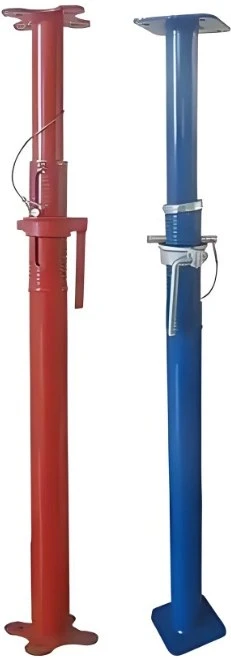
We supply adjustable props from 1.6 to 4.0 m closed range, in EN 1065 class B, C and D, hot dip galvanized, with or without tripod stands and with plain or U-head tops.
Key Advantages
- Graded capacity. Class B / C / D to EN 1065, so the load rating is a stated number, not a sales claim.
- Wall thickness. Outer and inner tube walls kept to the design - the single biggest difference between a prop that lasts and one that buckles.
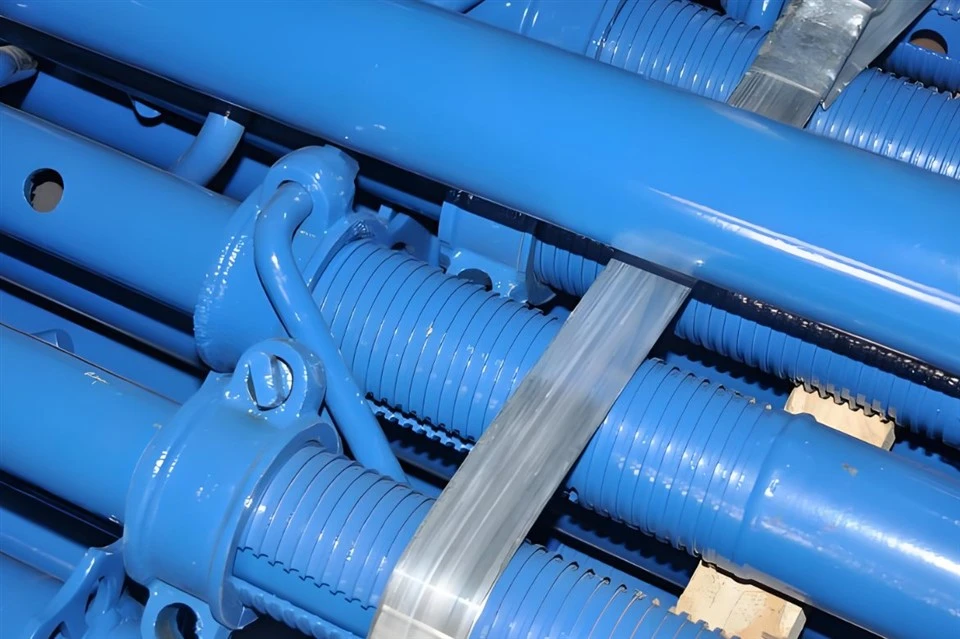
- Thread that holds. Rolled thread on the collar, checked for engagement, so fine adjustment does not slip under load.
- Galvanized. Hot dip coating on tube, collar and pin, so a wet site does not seize the thread.
- Complete with accessories. Tripods, U-heads and base plates quoted with the props so the layout works first time.
Technical Specifications
| Model | Closed / open height | Outer / inner tube | Class |
|---|---|---|---|
| 1.6–3.0 m | 1,600 / 3,000 mm | 60 / 48 mm | B / C |
| 2.0–3.5 m | 2,000 / 3,500 mm | 60 / 48 mm | B / C |
| 2.5–4.0 m | 2,500 / 4,000 mm | 60 / 48 mm | C / D |
| Wall thickness | 2.0–3.0 mm | 2.0–3.0 mm | - |
| Base / top plate | 150 × 150 mm / U-head | - | - |
| Finish | Hot dip galvanized | - | - |
| Standard | EN 1065 | - | - |
Step-by-Step Manufacturing Process
- Tube production. Outer and inner tubes rolled to the specified wall and diameter, straightened.
- Thread rolling. Thread rolled onto the inner tube - rolled thread keeps grain flow and resists stripping better than cut thread.
- Collar and nut. Collar cast or forged, machined to fit the thread with controlled play.
- Pin and plate welding. Pin holes drilled, base and top plates welded square to the tube.
- Galvanizing. Hot dip galvanized after fabrication, with thread cleaned after coating.
- Load test. Sample props tested to the declared class before a batch is released.
Quality Assurance & Certificates
- Material certificate for tube and plate
- Weld inspection at plate-to-tube joints
- Thread engagement and travel check
- Galvanizing thickness report, with thread condition confirmed
- Load test report per class, available for project submittals
Core Applications
- Slab and beam formwork support in building construction
- Bridge deck and pier falsework
- Temporary support during structural alteration
- Precast yard and tilt-up panel support
- Emergency shoring after damage or settlement
FAQ
How do I choose the class?
From the design load and the extended height. Capacity falls as the prop extends - a class C prop at full extension carries far less than at closed height, and the EN 1065 tables give the figure.
Tripod or not?
Use tripods where props are free-standing before the formwork is fixed, which is most slab work. They stop the prop falling over and keep the layout plumb.
Can props be re-used?
Yes, if the thread is clean, the pin is not deformed and the tube is straight. Inspect the collar and pin every strike; those are the parts that fail.
Frequently asked questions
Which standard and sizes does Adjustable Steel Prop come in?
Model: Closed / open height; 1.6–3.0 m: 1,600 / 3,000 mm; 2.0–3.5 m: 2,000 / 3,500 mm.
What applications is Adjustable Steel Prop specified for?
Slab and beam formwork support in building construction; Bridge deck and pier falsework; Temporary support during structural alteration.
Which certificates come with Adjustable Steel Prop?
Material certificate for tube and plate; Weld inspection at plate-to-tube joints.


